
Tattoo Aftercare Guide
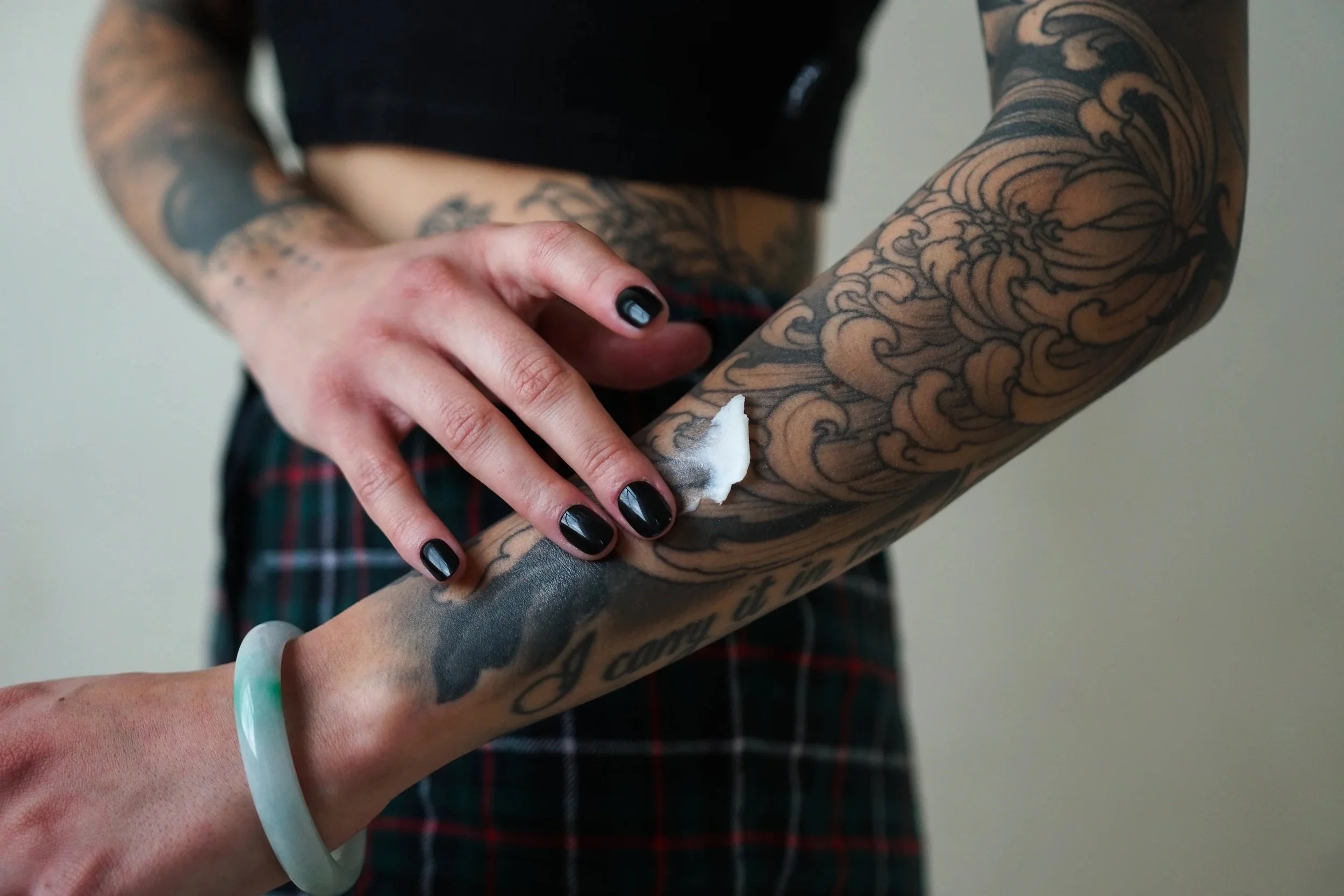
Always follow the specific instructions of your artist. Every tattoo heals a little differently depending on placement, size, skin type, and how much the area was worked.
A fresh tattoo is an open wound. Your job is simple: keep it clean, keep it protected, and don’t mess with it.
⸻
Part 1: First 72 Hours
Open Wound Care (Clean and Protected)
Your Goal
Keep the tattoo clean and protected from dirt, bacteria, and friction while it seals over (closes). You will do this by wearing a protective bandage for as long as your artist recommends. Often you will wear a second skin bandage for the duration of the first 72 hours. If you are instructed to remove your bandage early, follow the open wound washing routine for the remainder of the first 72 hours.
The Basics
Once your bandage is removed
Wash with clean hands only (no washcloths, loofahs, or scrubs).
After removing your bandage, Wash the tattoo using lukewarm water and mild, unscented soap. (Dove, Ivory, baby soap)
If your bandage is removed within the first 72 hours of healing please continue to wash the tattoo 4 times a day using lukewarm water and mild soap for the remainder of the first 72 hours of healing. Upon waking, before bed, and twice in between
If your tattoo touches something questionable during this stage of healing (dirty clothing, sheets, gym equipment, a pet, etc, wash it again.
Do not apply moisturizer or ointment during this time. Let the tattoo/wound close first
Open wound care washing routine
1. Wash your hands thoroughly with hot water and mild, unscented soap
2. Rinse, then lather up your hands with soap again
3. Rub soap over the tattoo with consistent pressure (no aggressive scrubbing)
4. Rinse thoroughly
5. Pat dry with a clean paper towel or clean cloth
6. Let it air dry a few minutes
7. Cover with clean, breathable clothing
Hygiene rules that matter
Sleep in clean sheets during this stage.
Wear clean clothing that covers the area (avoid tight or abrasive fabric)
Keep the tattoo away from dirty surfaces (gym benches, sofas, dust, etc)
Keep pets away from the tattoo and out of your bed. Pet hair/dander can cause complications
Sweat & workouts
Avoid working out or sweating hard during the first 72 hours, especially if you’re wearing a second-skin bandage. Sweat, heat and friction can cause avoidable complications.
⸻
First Moves, Wearing Your Bandage
Bandage A: “Second Skin” / Dermal Adhesive Bandage
Your artist may recommend wearing this for 1–4 days, depending on how much the skin was worked (more trauma = more protection needed). Bandage changes are sometimes needed to get through the recommended timeframe.
Fluid buildup is normal. You may see a pocket of liquid under the bandage (mostly plasma, plus a little blood/ink). Plasma helps early healing.
When to come back / contact the shop or artist
Please contact or visit the shop as directed by your artist, especially if:
• A large amount of fluid collects quickly or overnight
• The bandage leaks, or the seal is compromised
• The bandage peels up and exposes the tattooed area
• The liquid hasn’t started to settle/dry and it’s still very “soupy” well into the next day
If the bandage fails or is full, and you can’t replace it properly, switch to open wound care (washing routine above).
If your bandage stays on for 72 Hrs or more without any issues, you will have a closed wound when you remove your bandage. Just wash it off with mild soap and move on to Part Two of your tattoo aftercare.
Adhesive reaction (important)
A small number of people react to the adhesive on the second-skin bandage.
If the edges of the bandage become red and irritated, or the tattoo becomes more painful instead of less, remove the bandage and follow open wound care for the remainder of the first 72 hours.
If you’re removing second skin at home: remove slowly and gently, and avoid ripping upward. If it’s stubborn, warm shower water can help loosen the adhesive.
⸻
Bandage B: Standard Wound Dressing (Wrap/Pad)
Keep the dressing on 1–12 hours as directed by your artist.
Remove it only when you’re ready to do the first wash. (Open care washing routine above)
Then follow open wound washing care 4 times daily until 72 hours have passed or the tattoo has closed.
⸻
Part 2: 48–72 Hours to 14 Days
Closed Wound Care (Peeling/Scabbing Stage)
Your goal
Once the tattoo is sealed, the goal is to keep it lightly moisturized/hydrated so it can move and stretch with your skin without cracking or tearing.
Moisturizing timeline
After a minimum of 48-72 hours OR after the final second skin is removed:
Apply a light layer of unscented moisturizer or healing ointment 4 times a day (Aveeno, Aquaphor, CeraVe)
Rub it in gently. Less is more. Over-moisturizing can cause problems.
Scabs: baby them
If you have scabbing:
Be very gentle
Do not moisturize fresh scabs that haven’t had time to set (roughly, after the first 48-72 hours of healing), because you can soften/lift them and reopen the area.
DO
Keep it clean
Keep it lightly moisturized often
Wear clean, breathable clothing
DON’T
No picking or scratching (itching is normal and temporary)
No soaking: no baths, swimming, hot tubs, lakes, rivers, ponds, puddles or oceans until there’s no scabbing or peeling (often 2–3 weeks)
No sauna until there’s no scabbing/peeling (often 2–3 weeks)
No direct sunlight until peeling/scabbing is finished (keep it covered)
⸻
Signs of Infection: Don’t “wait and see”
Seek medical attention promptly if you notice:
Redness spreading or getting worse instead of better
Increasing pain over time (instead of gradually calming down)
Heat radiating from the area (warmth is normal early; radiating heat + worsening pain is not)
Swelling that’s worsening
Fever, chills, fatigue, nausea, or flu-like symptoms
If you’re worried about infection at any degree, seek medical care immediately. Skin infections can become serious if untreated.
⸻
Extra Safety Notes
If you have a condition that affects healing (example: immune suppression, diabetes, or you’re prone to skin infections), healing may be slower and you should speak with a healthcare professional if you’re concerned.
If you develop a rash, widespread hives, facial swelling, or trouble breathing, treat that as urgent and seek emergency care.
